


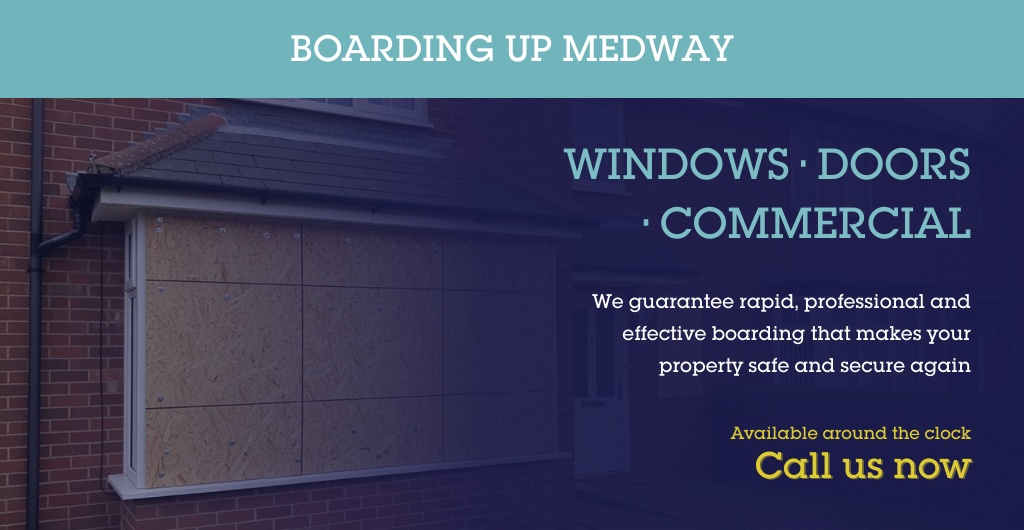
Boarding Up for Vacant Property in Medway
Vacant properties need a different level of care. Whether you’re between tenancies, managing a probate estate, awaiting sale, or dealing with a long-term void, leaving a building unsecured in Medway can invite trespass, vandalism, weather ingress, and insurance complications. We help landlords, agents, and owners across ME1, ME2, ME3, ME4, ME5, ME7 and ME8 to secure empty buildings quickly and responsibly.
Boarding Up Medway has been trading for 10+ years. We’re fully insured and our technicians are DBS-checked. We provide practical, defensible measures that insurers recognise, with itemised invoices and time-stamped photos of what we install. If you need immediate help to secure property out of hours, see our emergency boarding up, or call 01634 980 080.
When Vacant Properties Need Boarding Up
Empty buildings are more vulnerable than occupied ones. Common triggers include:
- End of tenancy: Locks changed but glazing or rear access remains weak.
- Awaiting refurbishment: Windows removed, temporary glazing not yet fitted.
- Probate or repossession: Property stands empty for weeks or months.
- Fire or storm damage: Openings exposed, needs to be made safe and weather-tight.
- Break-in or attempted entry: Door frames splintered, glazing smashed.
- Anti-social activity: Graffiti, smashed panes, or unauthorised access at night.
Vacant homes and shops across Rochester (ME1), Strood (ME2), Medway riverside and industrial edges in ME3, Chatham and St Mary’s Island (ME4), Lordswood/Walderslade (ME5), Gillingham (ME7), and Rainham/Wigmore (ME8) benefit from proactive measures—especially if the property won’t be attended daily. If your insurer requires you to “secure property” within set timeframes after a loss, we’ll help you meet those conditions and document it.
The Right Methods for Empty Buildings
Securing a void isn’t just “stick a board on and leave.” We match materials and fixings to the risk, duration, and the building’s condition.
-
Window boarding (short to medium term)
- 18mm exterior-grade plywood for doors and larger windows; 12mm OSB for smaller openings where appropriate.
- Anti-tamper fixings (clutch head or similar) to prevent removal from outside—critical when the site is unattended.
- Through-bolt systems with interior spreader plates where frames are compromised, to avoid further frame damage.
-
Door boarding and temporary doors
- Over-boarding damaged doors to “make safe” for short periods.
- Temporary steel doors for medium-term void security: keyed access for agents/builders, adjustable frames to existing openings, and robust anti-tamper fixings. Ideal when keys are lost, locks are unreliable, or multiple trades need controlled access. See door boarding.
-
Shopfront and commercial glazing
- Wider spans require bracing to prevent bowing. We add internal studs or cleats as needed.
- For retail, we can leave a dedicated service opening or fit a temporary steel door so you can re-enter safely. See shopfront boarding.
-
Roof lights and overheads
- If skylights or roof panels are damaged, we install weather-resistant boarding, often with perimeter seal to reduce water ingress, mindful of ventilation needs in damp properties. See roof boarding.
-
Medium-to-longer-term void security
- Steel security screens (Sitex-style) and temporary steel doors for properties expected to remain empty—deterrent value is high, visibility is reduced from the outside, and removal requires tools and time.
- We discuss ventilation where damp and mould are concerns. Boarding should not trap moisture unnecessarily; screened venting may be appropriate.
Why we choose these methods:
- Anti-tamper fixings reduce the chance of quick removal and re-entry.
- Exterior-grade materials maintain stiffness and edge integrity in wet weather.
- Through-bolting spreads loads when frames are rotten, preventing fixings from tearing out.
- Temporary steel doors provide legitimate access without leaving the property exposed.
What You Get When You Instruct Us
- Clear plan and options: We explain the choices—e.g., plywood vs OSB, short-term board vs temporary steel door—so you can match the solution to budget and risk.
- Insurer-friendly documentation: Time-stamped photos before and after, itemised invoice, and a simple work statement detailing locations boarded and fixings used. See our insurance guidance.
- Respect for the fabric: We aim for non-destructive methods. If frames are too damaged for that, we’ll explain the implications before proceeding.
- Practical access management: Combination or keyed temporary doors for estate/letting agent access, builder visits, or meter readings.
- Tidy, safe finishes: Flush edges, no protruding fixings, and hazard awareness around pavements and shared entrances.
Typical Vacant Property Scenarios We Handle
- Empty terrace with a broken rear window after attempted entry: We through-bolt an 18mm ply panel with interior plates and fit a temporary steel door to the rear so contractors can start repairs.
- Ground-floor shop unit awaiting fit-out: Full shopfront boarding with internal bracing and a service access panel or temporary door for deliveries.
- Probate property with tired frames: Mix of anti-tamper boarded windows and a steel door to the main entrance, with labelled keys for authorised visitors.
- Fire-damaged flat: We coordinate with fire service release, board compromised glazing, and install a tamper-proof door while remediation is planned. For the event itself, see post-fire securing.
If your situation is sudden and unsafe—smashed window, forced door, exposed opening—use our emergency boarding up for immediate attendance prioritisation.
Our Process for Vacant Properties
- Call us with the address, access constraints, and any insurer or agent requirements.
- We provide a realistic ETA based on current workload and location across ME1–ME8.
- On site, we assess frames, openings, and risk level. We’ll recommend temporary boarding, steel doors, or security screens depending on duration and exposure.
- We measure and cut boards on site for a close fit. Large shopfronts may require central bracing to prevent flex.
- Fix using anti-tamper screws or through-bolts. Where appropriate, we add perimeter sealing to reduce water ingress, keeping ventilation needs in mind.
- Provide photos and an itemised invoice. If insurers need further detail, we’ll supply a brief work statement.
For context on materials and methods, see what boarding up is or our window boarding service.
Planning Ahead vs Emergency Securing
- Planned void security: If you know a property will be empty for weeks or months, we can schedule a site visit to specify a combination of steel screens, temporary doors, and selective boarding to balance deterrence, ventilation, and access.
- Emergency “make safe”: After a break-in, storm, or accidental damage, our priority is to make safe openings and secure the perimeter. We can upgrade to longer-term measures later if needed.
We don’t issue legal notices or handle possession proceedings. We’re not loss adjusters, but we provide documentation insurers typically ask for. Smoke and odour remediation after fire sits outside our scope—our role is to secure the property.
Medway Coverage for Vacant Properties
We secure vacant homes, shops, and light industrial units across:
- ME1 (Rochester and surrounding)
- ME2 (Strood, Frindsbury, Cuxton)
- ME3 (Hoo Peninsula, Cliffe, Isle of Grain)
- ME4 (Chatham, Brompton, St Mary’s Island)
- ME5 (Walderslade, Lordswood, Princes Park)
- ME7 (Gillingham, Hempstead)
- ME8 (Rainham, Twydall, Wigmore)
Looking for local context? See nearby area pages:
We prioritise urgent calls and aim to attend as quickly as possible. When you call, we’ll give you a realistic ETA for your address.
Vacant Property FAQs (Medway)
How do you secure a vacant house with rotten window frames?
Where frames are weak, standard screws can tear out. We often use through-bolts with interior spreader plates so the board clamps to the wall, not just the frame. If the substrate is too friable, we’ll propose steel screens or frame reinforcement.
Can you fit a temporary steel door so agents can do viewings?
Yes. We install adjustable-frame temporary steel doors with keyed cylinders or combination access, ideal for viewings and contractor visits. We’ll agree key control with you or your agent.
What’s best for a long-term void in ME3 (Hoo Peninsula) where the property is isolated?
Steel security screens combined with a temporary steel door provide strong deterrence in low-footfall areas. We can also consider partial venting to reduce damp build-up. We’ll discuss the balance between security and moisture management.
I manage flats in ME7—can you secure just the damaged unit without blocking the communal entrance?
Yes. We isolate the affected unit door/window only, ensuring communal escape routes remain clear. We use tidy fixings and low-profile boards to avoid trip hazards in shared corridors.
Will boarding up affect my insurance claim?
Insurers commonly require prompt action to secure property after damage. We provide time-stamped photos, an itemised invoice, and a short work statement that typically meet their needs. See our guidance on insurance claims.
How quickly can you attend a vacant shop with a smashed window in ME4?
Attendance varies by time of day and workload. We prioritise urgent calls and will give you a realistic ETA when you ring. For urgent needs—“shopfront boarded up”, “make safe”, “out of hours”—use our emergency service.
Do you offer temporary fencing for exposed sites?
Yes, where perimeter control is needed, we can deploy temporary fencing alongside boarding and doors to deter access around yards or loading bays.
Can you remove boards and doors when the property is reoccupied?
Absolutely. We can de-secure, remove fixings, and make good as agreed, or hand over to your glazing/door contractor.
Materials and Fixings We Commonly Use
- 18mm exterior-grade plywood for doors and large windows
- 12mm OSB for smaller openings and internal partitions
- Anti-tamper screws (clutch head/2-hole) where external removal risk exists
- Through-bolts with interior spreader plates for compromised frames
- Adjustable-frame temporary steel doors with euro cylinder locks
- Perimeter seals or flashings to reduce water ingress on exposed openings
- Bracing timbers for wide shopfront spans
We’ll always explain why we recommend a material. For instance, anti-tamper fixings prevent removal from outside—important if the property will be unattended for days. Through-bolting avoids further damage to already weak timber frames.
Practical Tips for Owners and Agents
- Tell your insurer as soon as the property becomes vacant—conditions often change for empty properties.
- Keep a log: date/time of incident, police reference number (if applicable), and photos before we arrive if safe to do so.
- Think access: decide who needs entry (agent, builder, surveyor) so we can set up the right temporary door and key/combination plan.
- Consider neighbours: in terraces and flats, we aim for solutions that reduce noise and visual impact while still deterring entry.
If you’re unsure what you need, we can start with short-term temporary boarding and upgrade to steel doors/screens if the void extends.
Related Services and Situations
-
Services:
-
Situations:
-
Property types:
Next Steps
Ready to secure a vacant property, or need urgent “board up” tonight? Call 01634 980 080 for immediate guidance, or email us with photos for a same-day assessment. We cover ME1, ME2, ME3, ME4, ME5, ME7 and ME8 and will give you a realistic ETA when you call.