

What Is Boarding Up?
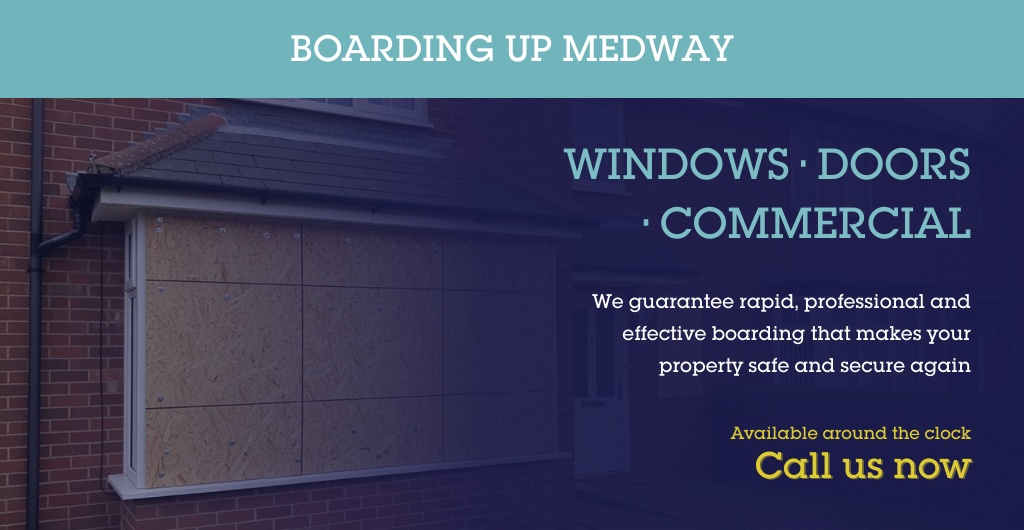
Boarding up is the process of securing damaged, broken or vulnerable openings—typically windows, doors, shopfronts and roof lights—using strong sheet materials and anti‑tamper fixings to make the property safe and weather‑tight. It’s a temporary but robust measure used after incidents like burglary, vandalism, storm or fire damage, or when a property is vacant and needs protection.
At Boarding Up Medway, we provide professional boarding up across ME1, ME2, ME3, ME4, ME5, ME7 and ME8. We’re fully insured with 10+ years’ experience, and our DBS‑checked technicians attend homes, shops and commercial sites to secure properties day or night. If you need urgent help now, visit our dedicated page: emergency boarding up.
When Do You Need Boarding Up?
You might need to board up when:
- A window is smashed, cracked, or won’t close securely (accident or break‑in).
- A door or frame has been forced and won’t lock.
- A shopfront has been damaged—glazing blown out, ram‑raid or vandalism.
- Storms loosen or dislodge skylights, roof glazing, or cladding.
- Fire crews have broken glass for access or ventilation.
- A property is vacant/void and needs temporary security.
Boarding up is about risk management: keeping people safe, stopping further damage from weather, and deterring intruders until permanent repairs or replacements are arranged. For situation‑specific guidance, see:
- Burglary and break‑in securing
- Vandalism repairs
- Storm damage
- Fire damage securing
- Flood damage
- Accident/impact damage
How Boarding Up Works: Step by Step
Every job starts with a safety check. Glass, debris and unstable frames can be hazardous. Once safe, we follow a clear process:
-
Assess and measure
- We identify all affected openings, check frames, hinges, mullions and lintels, and record measurements.
- We discuss access (inside, outside, or both) and any constraints like security shutters or restricted areas.
-
Choose materials
- For most openings we use 18mm exterior‑grade plywood for strength and weather resistance.
- 12mm OSB may be used on smaller internal openings or where weight is a factor.
- For medium‑term void security, we may recommend steel security screens or a temporary steel door (see below).
-
Cut and prepare
- Boards are cut to size with allowance for fix points and structural support.
- Edges are smoothed to minimise splinters and improve fit.
-
Fix securely
- We use anti‑tamper fixings wherever possible so boards cannot be removed from outside—important if the property will be unattended.
- On fragile frames, we use packers/spreaders to distribute load and avoid further damage.
- If frames are too compromised for non‑destructive fixing, we’ll explain options before proceeding.
-
Weatherproof and finish
- We ensure tight fits, consider drip edges, and where appropriate add temporary sealing to reduce draughts and water ingress.
- We remove debris and broken glass from the immediate area, then make safe and tidy.
-
Document for you and your insurer
- You receive time‑stamped photos, an itemised invoice, and a short work statement. This supports claims—see our guidance on insurance claims.
For more detail by opening type, explore:
Materials and Methods We Use (And Why)
- Exterior‑grade plywood (typically 18mm): Strong, rigid, holds fixings well, good for street‑facing windows and doors.
- OSB (typically 12mm): Suitable for smaller, sheltered openings, internal partitions, or short‑term needs.
- Anti‑tamper fixings: Prevent easy removal from the outside—vital for unattended properties.
- Packers and spreader plates: Protect weak frames and spread the load of fixings.
- Temporary steel doors: Provide lockable access with far higher resistance than boarded timber—best for forced entries or vacant properties needing controlled entry. See temporary steel doors.
- Steel security screens: Sitex‑style perforated screens allow light and ventilation for longer‑term void properties. See vacant property solutions.
We select methods to balance security, weather protection, access needs, and your insurer’s requirements.
What You Get When You Book Us
- A calm, professional team who’ll explain options clearly.
- A property made safe and secure—fast, without making promises we can’t keep.
- Materials sized to your openings, fixed with appropriate anti‑tamper methods.
- Clean‑up of the immediate work area and removal of loose glass.
- Documentation for insurers: photos, itemised invoice, and a brief work statement.
- Practical next steps on repairs or temporary access solutions.
If you’re comparing options or budgeting, read our honest guide to factors that affect cost: pricing.
Boarding Up for Different Property Types
- Residential (houses, flats, maisonettes): Often involves sash or uPVC windows, patio doors and side entries. We prioritise safe internal access and child/pet safety. Learn more: residential properties.
- Commercial (shops, restaurants, offices): Larger spans, laminated/ toughened shopfront glass, shutters and out‑of‑hours attendance. Risk of repeat vandalism considered. See commercial boarding.
- Vacant/void properties: Medium‑term security, steel screens, and temporary steel doors with keyed access for agents or contractors. See vacant property.
Is Boarding Up Safe for My Frames and Brickwork?
We aim for non‑destructive fixing methods, but safety comes first. If a frame is too damaged for standard fixings, we’ll explain the implications—sometimes fixings must go to sound timber, masonry, or use cross‑bracing to avoid collapse. We always:
- Use packers/spreaders to protect weak points.
- Avoid over‑tightening that could split timber.
- Propose alternatives (steel doors/screens) when better for the structure.
We’ll talk you through options and costs before we proceed. For an urgent make‑safe, call us: 01634 980 080.
How Long Does Boarding Up Last?
Boarding up is temporary security—days to weeks while permanent glazing or doors are arranged. For longer‑term needs or voids, steel security screens and temporary steel doors offer better durability and controlled access. We’ll recommend a timeframe based on your situation and insurer guidance.
Working With Insurers and the Police
- Keep your police reference number after a burglary or vandalism—insurers ask for it.
- Take photos (from a safe distance) before we arrive if you can.
- Contact your insurer early; we’ll provide what they typically need: photos, itemised invoice, and a work statement. We’re not loss adjusters, but we streamline the evidence you’ll need. More help here: insurance claims.
If the incident is ongoing or you feel unsafe, prioritise calling the police. When safe, we can secure your property.
What to Expect When You Call
- We’ll ask what happened, your postcode (ME1, ME2, ME3, ME4, ME5, ME7 or ME8), and what’s damaged.
- We’ll give a realistic ETA based on time of day and workload. We don’t promise fixed times, but we prioritise urgent “make safe” jobs.
- On arrival, we’ll assess, agree the plan, complete the temporary boarding or other solution, and issue documentation.
For immediate help, use our dedicated line: Call 01634 980 080.
Common Scenarios We Handle in Medway
- Board up broken window after a late‑night incident near a high street.
- Smashed shopfront needing large‑span boarding and anti‑tamper fixings.
- Storm‑damaged roof light requiring safe access and weatherproof boarding.
- Forced rear door needing a temporary steel door to maintain access.
- Vacant property requiring steel security screens to deter trespassers.
If this sounds like your situation, go to our 24/7 boarding up in Medway page.
FAQs: Boarding Up Explained
What is boarding up in simple terms?
It’s a temporary security and weatherproofing solution—fitting cut‑to‑size boards over damaged or vulnerable openings so your property is safe until permanent repairs.
Will the boards go inside or outside?
It depends on access, frame condition and risk. Street‑facing shopfronts are often boarded externally with anti‑tamper fixings. Domestic windows may be boarded internally to reduce visual impact. We choose the safest, most secure method for your case.
What materials do you use?
Typically 18mm exterior‑grade plywood for strength and durability; 12mm OSB on smaller, low‑risk openings. For longer‑term or higher‑risk needs, we recommend temporary steel doors or steel security screens.
How quickly can you secure my property?
Attendance varies by time of day and workload. We prioritise urgent calls and give you a realistic ETA when you ring. For emergencies, see emergency boarding up.
Is boarding up covered by insurance?
Often yes, especially after burglary, vandalism, fire or storm damage. Policies vary—check with your insurer. We provide time‑stamped photos, an itemised invoice and a work statement to support claims: insurance claims.
Will boarding up damage my frames?
We use methods to minimise damage—packers, spreaders, and appropriate fixings. If frames are too compromised for non‑destructive options, we’ll explain alternatives and get your approval before proceeding.
How long should I keep boards in place?
Usually until replacement glazing/doors are fitted—days to a few weeks. For vacant properties or repeated risk, consider steel security screens or a temporary steel door.
Do you cover my area in Medway?
Yes—ME1, ME2, ME3, ME4, ME5, ME7 and ME8. Check our areas we cover or call 01634 980 080.
Ready to Secure Your Property?
Need to board up a smashed window or damaged door now? Call 01634 980 080 for immediate assistance, or see our emergency boarding up page. For quotes and planned works, you can also email us.